
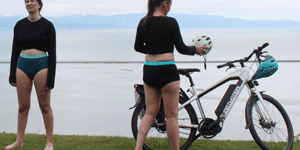

There are a lot of bike carrier options to choose from that attach to a variety of different places on a bike. To get a carrier that will work for your bike you need to understand how it attaches.
Supporting you and your family to SMILE when you ride.
Load the bike, not your body…
Being able to carry stuff with you when you ride your bike is key to using your bike more often. We love the idea of people using bikes as transport as well as for leisure and it would be great wherever you rode to be able to carry gear. Having the ability to load up your bike rather than your body is important for your comfort. It also removes any barriers to using your bike. Bike carriers – front or rear – are a great way to achieve this loading of the bike. So if you are interested in using a bike carrier but don’t know very much about them, read on. We are going to start by answering the question, how do bike carriers attach to bikes?
Where does a bike carry attach?
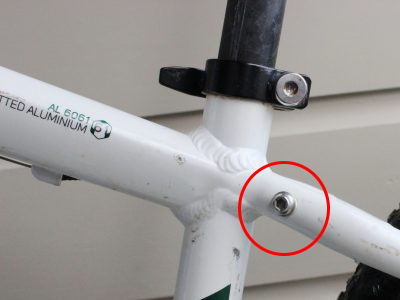
Most bike frames come with additional screw holes called eyelets that allow you to screw things to your frame. These things include water bottle holders, pump mounts, mud guards and front or rear bike carriers.
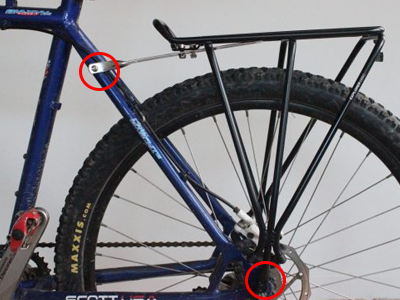
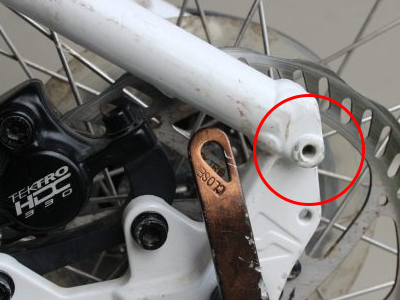
Most bike carriers will attach to eyelets on your rear seat stay (rear carrier) or front fork (front carrier). See the photo below to know what an eyelet on your frame looks like. There will also be eyelets on your rear & front dropouts. This is the part of the frame that the middle (hub) of your wheel is screwed to. See photo below.
You can also use the rim brake screws (front & rear carrier) or seat post clamp (rear carrier) as points of attachment for carriers.
Traditional Rear Carriers
A traditionally designed rear bike carrier will have two different points of attachment to your bike. The first – high – attachment point will need screw holes. Your options are found on eyelets in the seat stays, or into the rim brake screws or the seat post clamp. The second attachment point will be at the bikes rear wheel hub, usually by screwing into the part of your frame called the drop out. Look for screw holes around the middle of your rear wheel that were designed for this.
Traditional Front Carriers
A traditionally designed front bike carrier can be one of 2 types which are distinguished by the number of attachment points. A single front carrier will more than likely attach to the rim brake bosses (screws). A double front carrier will have two different points of attachment to your bike. The first will be at the bottom of the front fork on the front dropout. The second – higher – attachment point being mid way up the front fork via a P-Clamp that would come with the carrier. (For more on P-Clamps see below).
If you don’t have eyelets for carriers on your bike and you want to use a traditional style carrier, there is a solution. Read the section below on P-Clamps & quick release kits. Or if the style of carrier doesn’t bother you learn more about seat post carriers, handlebar carriers or the Thule clamp on carrier.


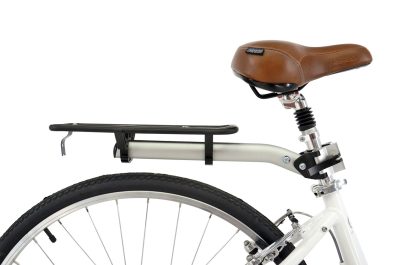
Seat Post Attachment
These rear carriers have only one point of attachment to the bike at the seat post. This means they can only be used for light loads and they can tend to sway around a bit. Usually a maximum of 7kg.
Freeloader (Thule Tour Rack)
Designed in New Zealand and then brought by Thule, this carrier can be attached to the rear or front of your bike. It has its own unique clamping system so does not need eyelets. It can clamp onto your rear seat stays or your front forks, allowing it to be used on a wide variety of bikes – up to 29″ x 2.5″ tyres, including full suspension mountain bikes. It is meant for lightweight bike packing, carrying weights up to 11kg on the rear or 10kg on the front. It can also be used with Thule panniers.

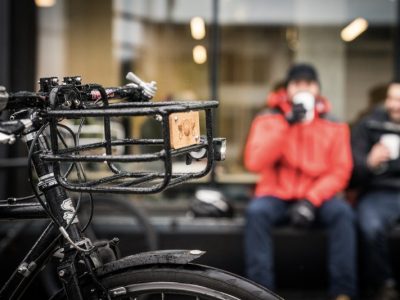
Handlebar Carriers/Baskets
Attached by a clamp system to your handlebars these front carriers can have a flat deck or be a bit more like a basket. Again they can only handle lightweight loads – max 7kg.
Alternative Attachment Systems
P-Clamps
When your bike frame offers you no eyelets for attaching a front or rear carrier to, one option is to use P-Clamps. Some bike carrier makers like Tubus, sell there own P-Clamps as accessories with their carriers. Double front carriers will more than likely come with P-Clamps. If you need P-Clamps and the carrier you are buying doesn’t come with them, take a trip to your local hardware store and buy some clamps. Try not to over tighten them when attaching – it’s a good idea to protect your frame with some rubber. Try a piece of old inner tube if you have one lying around.
Quick Release Kits
Another option is to purchase a bike carrier quick release kit which will allow you to attach your carrier to points where a quick release could be used. For example if you have no lower screw points on your rear dropout a rear wheel hub quick release can be used. Further up your bike a quick release on your seat post clamp will do the trick.
Your bike riding success is different to others… use our stories and support, get the right solutions.
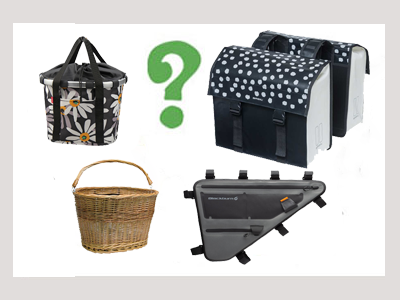
Carrying Gear Buying Guide
Use the full range of gear carrying options to get the right solutions for you and your family.

Ride More Places
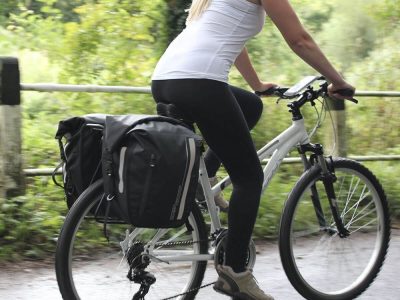
Carrying Gear Stories & Support
A collection of stories that will help you learn about carrying bike gear. All on an easy to navigate page.
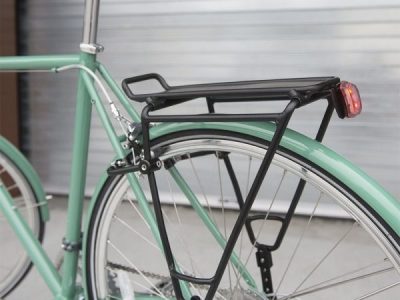
Rear Carrier for Town/Commute Riding
What should you look for in a rear carrier to be used around town and for commute riding?

Recreation/Trail Riding - Am I Safe?
When you go out for a ride what will keep you safe? Do you need to plan or prepare in a better way? Lets find out.
Bike Path Riding Stories
Stories in Bike Path Riding support you to learn about riding a bike in different environments. So you can successfully choose to ride more place, more often.
Support and inspire other riders and families to ride
Share your riding outings, adventures and experiences on our quick and easy question and answer forms. Join us in helping others ride bikes. All entries receive a free shipping coupon and go into our seasonal prize draw.
goRide supporting women and families to SMILE when you ride