
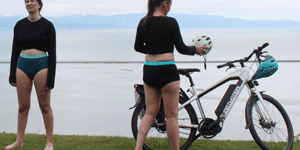

Ride safely with a Rear Kids Bike Seat.
Create plenty of happy family biking memories. Ride safely with a Rear Seat every time you ride.

Welcome. Read our tips on how to safely and confidently ride with a Raer Kids Bike Seat before you head out for your first ride
Riding with a Rear Kids Bike Seat
Having load at the rear of your bike can make some bike skills a little more challenging
Mounting and dismounting – a Rear Seat makes the back of your bike heavy so it can be a bit tricky to lean your bike and still be in control of its tipping point. So when you go to get on & off your bike it is best to keep it as upright as possible. If you have a step through frame or curved top tube this may not be too difficult. Anyone with a triangle frame/ straight top tube will need to practice. You can not swing your leg over the back of your rear wheel when a rear seat is attached so if this is how you get going or stop, a new procedure will need to be practiced.
Stopping and starting – You have added weight to your bike so choose an easier gear to set off in and you will need to brake earlier to come to a stop. Otherwise a seat that is mounted behind you will not interfere with starting/stopping.
Balance – a rear seat is high at the back of your bike so you will notice a difference to the feel and balance of your bike. You will get used to the added weight and how it effects your balance quite quickly. Slow right down for corners and never attempt to turn sharply or lean over too far. You may notice a tendency for the front wheel to lift off the ground easily if you pull on the handlebars (you can pull like this when climbing a hill) again this is about weight at the rear of your bike. As your child gets older (heavier) discourage them from leaning out to see around you, their weight will effect your balance.
What can help? Lowering your bike seat when riding with your child can help, so you can stay seated when you come to a stop with your feet being able to touch the ground. The more riding you do the quicker you will adjust to the new feeling your bike has with a Rear Seat and child on it. Be aware that the tendency to tip (front wheel lift) gets greater with the weight of your child, as they approach 5 or 6yrs, mounting the seat as close as you possibly can in behind you helps prevent this. Being fit & having good leg strength also helps to prevent this tendency to pull on your handlebars.
Safely Use a Rear Seat
Before your First Ride
Having the weight of a child on your bike can change the handling of the bike – cornering and pushing off to start to ride. You need to practice in a safe environment for the first time without your child to see if your steering or balanced is affected by the seat. You are planning to with a passenger on your bike so you need to ride within your limits and be aware that your bike will handle differently. You may need to brake earlier and corner at a slower speed. A rear mounted child bike seat places weight to the rear of your bike.
Test that the seat is firmly attached to the bracket or carrier – you should not be able to move the seat in an any direction. Understanding how the seat is attached is an important part of being the adult rider. Now is the time to take a good look and practice getting the seat on & off. You must know where to check and what you are looking out for.
First Ride with a Passenger
Only after you feel safe should you take your child with you. Practice away from road traffic in a quiet, safe place. Your new set up will steer & brake differently to what you are used to without your child so go slowly to begin with and talk to your passenger about what you are doing so they don’t get any surprises. You are now attempting to ride with a passenger on your bike so you need to ride within your limits. The added weight is sitting entirely over your rear wheel making the rear of your bike heavier. Having the weight of a child on your bike will also change the effort you need to make for pushing off to start to ride. Now is the time to get used to all this change.
Initial adjustment of harness and footrest:
The initial adjustment of the footrest should be done before your child gets into the seat. You also need to know how you are going to balance your bike while putting your child into the rear seat. You need the bike to be stable and safe. Use a double kickstand, get someone to help you or rest the bike against a very stable object.
Foot rest adjustment: Foot rests are easily adjusted by opening the clip at the back of the foot rests and sliding them up or down – dependant on the length of your childs legs. There are set grooves that they slide into and out of so once you have it set at a good height, simply close the clip to secure it.
Shoulder strap adjustment: Once your child is in the seat close the shoulder harness and adjust the straps for a firm, secure fit. Take your time and practice opening and closing this 5 point harness system. You need to push both halves in and press from the sides at the same time.
Everday Riding – Have a process in place.
- Plan your route, know where you are going and approximately how long it will take you. Choose environments and roads/trails you are happy to ride on or through.
- Safety check of adult bike. Please take 30 seconds before every ride to do a safety check of your bike. Is my Bike Safe to goRide?
- Safety check of Rear Seat. Inspect the Rear Seat and mounting system/bracket for loose nuts/bolts before every ride. Riding a bike causes vibration which will loosen things over time. We recommend carrying a small tool kit that will assist you with keeping your Rear Seat safe whenever you ride.
- Check helmets & harness your passenger. Before every ride adjust your kids helmet so it is low, level, snug and secure. Correct Bike Helmet Fit. Clip your child into the harness. Make sure it’s not too tight. You want firm but comfortable, as your child grows the harness & footrests will need to be adjusted.
- Communicate and talk while you ride. Try not to surprise or shock your child while on the bike. Let them know what is happening. The Rear Seat is positioned right behind your body so your child will not always be able to see what is going on in front of your bike. As they get older discourage them from leaning sideways to see around you – this can greatly effect your balance.
- Control your speed, be prepared to stop, scan your environment and know the road/route you are taking
The adult bike must be either resting against a secure object or on a double kickstand when you go to place your child in the Rear Seat. You must never leave your child unattended in a Rear Seat so you need to be ready to go before placing them into the seat. Check for loose clothing, shoelaces or straps hanging down or into moving parts of the bike. With a Rear Junior (4 to 10yr olds) please be careful with the lap belt, if not secured it will dangle down into your rear wheel.
Locking your seat: You have the ability to lock your Thule or Yepp bike seat to your bike so that it is safe when you are not with it. The key hole is found under the seat and disables the red button, grey handle so that the seat can not slide off the bracket.
We’re here to help. If riding with your Front Seat has raised some questions for you. Please call us on 021 025 15576 or 0800 44 33 77 or CONTACT us via email
Enjoy the family time and memories that you will create with a Rear Kids Bike Seat. goRide, supporting you to SMILE when you ride.
Your bike riding success is different to others… use our stories and support, get the right solutions.

Ride More Places
Bike Gear Stories
Women and families learning ...
Buying Guides

Solution Finder

Types of Riding Stories
Support and inspire other riders and families to ride
Share your riding outings, adventures and experiences on our quick and easy question and answer forms. Join us in helping others ride bikes. All entries receive a free shipping coupon and go into our seasonal prize draw.
goRide supporting women and families to SMILE when you ride