

Being balanced on a bike is an important skill to have. Balance comes more naturally to some. If your balance is not as good as you would like, there are ways to improve.

Riding a bike requires good balance especially when the environment or terrain changes. Uneven surfaces can challenge even the best of us. Regardless of your current ability to balance it is definitely a skill that everyone who rides a bike should practice and improve. This will then improve your riding.
First thing to do is check your…
Body Position & Bike Set Up
Having a strong, efficient position on the bike will help with your balance. There are several things to check to make sure you are riding your bike in a sustainable position.
- Seat Height – the height your seat is set at is important for pedalling motion and power. You should ideally have a leg that is close to full extension on the down stroke of your pedal action. You want to be able to generate good power but still be confident.
- Seat Angle/Tilt – if you can’t sit properly on your seat or it makes you move around or slide your balance will be affected.
- Reach to Handlebars – again you need to be in a comfortable position where you are not stretching or cramped up. Good posture should be easy to achieve. The ‘A’ position requires a flat upper and lower back, dropped shoulders and C shaped arms
For more on this topic please read the following stories. Always be aware of your body position while riding, keep checking in with how your body is feeling. Bike Seat “Sweet Spot” explains height, tilt and reach. ‘A’ Body Position shows your ideal body position (includes a video)
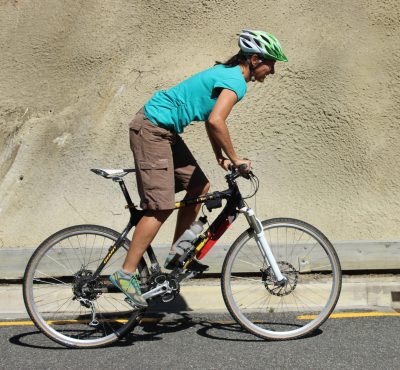
Good body position on your bike will help with balance
Tips for Improving Balance
Look ahead and keep your head and eyes up!
This sounds so simple but when we start to feel a bit uncertain or unbalanced on a bike we tend to look at our front wheel. Only look where you want to go. Your eyes should be looking at the road or track directly in front of you. How far ahead will depend on how fast you are going but aim for 2-3metres in front of your bike. As you ride in more challenging places this rule becomes more important. When off road trails narrow there will be a tendency to look off the track, or worse, down the bank! Don’t! Keep your head up and eyes ahead. If it starts to get a bit bumpy under your bike again we naturally want to look at the rocks or stones creating the impacts. If you have been following the rule (look ahead, head and eyes up) you will have spotted the obstacle ahead of you and made adjustments to your steering to choose a good line or path. You then need to trust in your decision and continue to look ahead knowing you will miss or anticipating the bump on the track.

Look ahead to be aware of what is coming on the track
Things to do off the bike to improve balance
If you don’t have very good balance when you are off the bike chances are that on the bike won’t be much different. So there are ways to help with your balance before you even get to your bike. These strengthening tips are great for everyone that rides a bike. They are also a great thing to do when you are not riding very much, perhaps the weather is particularly cold or wet and you can’t ride. We recommend spending that ride time on exercises that will help you when you get back to your bike. Our bodies are all different and through a life time will have experienced different things making them short, tight, weak in certain places or on a certain side. This body history effects your ability to balance.
Strengthen Your Core
Having a strong core is an essential element in maintaining good body position on a bike (read more about this subject: Core strength & your riding position). If you have a strong core your movements will be strong and efficient and you will be well balanced when you ride.
There are all sorts of ways that you can work on core strength. Both Yoga and Pilates offer core strengthening and balance work. These days you can do classes in a variety of places or stay at home and do them online. If a class is not your kind of thing try doing really simply things on a daily basis. Stand on one leg to brush your teeth. Swapping legs from morning to night. Each day attempt to stand on one leg and shut your eyes. Get yourself a Swiss or Gym ball and sit on it rather than a chair. Buy a wobble board and spend 10 to 15mins a day trying to balance on it.
Strengthen Your Leg, Hip & Butt Muscles
Again strength in these muscles will make time on your bike easier. Having balanced strength from front to back or from side to side will help with balance and alignment when you pedal. For more on pedalling read Pedalling Technique or see the story on Pedalling & Bike Seat Comfort.
There are a huge variety of things you can do to strength leg, hip or butt muscles. If you are aware of an area of weakness we recommend focusing and working on that area to help with balance when you ride. Walking, pilates, yoga, hill walking, climbing stairs, weight training or gym classes – these are all ways to improve strength. Choose something that appeals to you and that you will stick at.

Things to do on the bike to improve balance
Practicing Balance.
To follow are a couple of skills to practice on your bike in a quiet, empty place like a car park, school/sports ground, wide bike path. Trying these skills is meant to challenge your balance in a safe environment and in a way that you feel like you are in control. Only move onto a harder stage when you feel confident about what you have completed.
Ride in a straight line. Great to practice this where there are actual lines for you to stay on. Sounds pretty simple but it can be challenging. How long can you maintain the straight line for? As you get better at this skill try to go slower. The slower you go the harder it is to maintain your balance and keep your bike upright. You may eventually be going so slow that it is easier to stay balanced up out of your seat, balancing on your pedals.
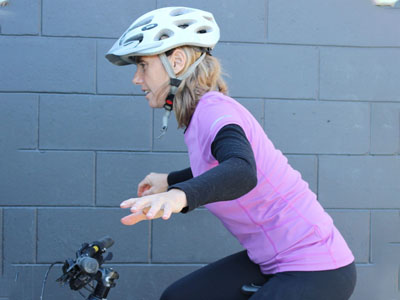
Straight line while looking back. This skill definitely requires good balance and is an essential part of riding in traffic or a group. To begin with don’t turn very far, keep your torso straight and turn your neck for a quick scan only. Do this several times to one side while trying to keep your bike moving forward in a straight line. We recommend practicing to your right as this will be where most of the traffic or things you need to see are – we ride on the left). Remember what we said about speed above so make sure you are going fast enough (but not too fast) to make this achievable. When you have mastered one side try turning your neck to the other side.
To practice turning for longer it is really important that you have a good distance of straight clear riding space in front of you. To turn for longer take one hand off the handlebar and open up your body while twisting your back to get a good view of whats happening behind you. If you need to you can break this skill down into stages. First ride with one hand only on the handlebar maintaining good balance and a straight riding line. When you feel good about this practice the back twisting movement while still looking ahead. When you feel balanced doing this add the final bit of the turn – your head.
Your bike riding success is different to others… use our stories and support, get the right solutions.

Ride More Places
Bike Gear Stories
Women and families learning ...
Buying Guides

Solution Finder

Types of Riding Stories
Support and inspire other riders and families to ride
Share your riding outings, adventures and experiences on our quick and easy question and answer forms. Join us in helping others ride bikes. All entries receive a free shipping coupon and go into our seasonal prize draw.
goRide supporting women and families to SMILE when you ride