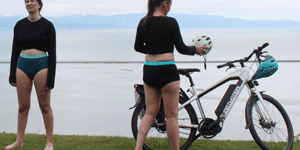
E-Bike Riding – Am I Safe to goRide?

E-Bike Riding – Am I Safe to goRide?

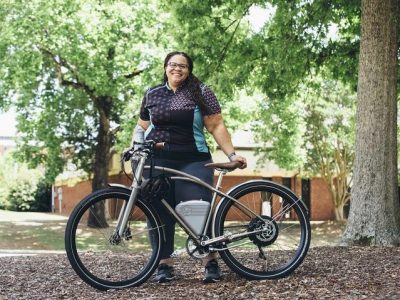
Riding any kind of bike gives you the ability to connect with the outdoors and E-Bikes help you to ride further and see more.  To be safe, comfortable & confident you need to understand any risks and manage them well.

Supporting you and your family to SMILE when you ride.
womens boyleg goUnders

Tip One – Wear a Good Bike Helmet & Have a Good Lock

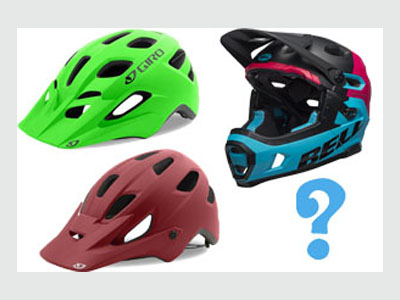
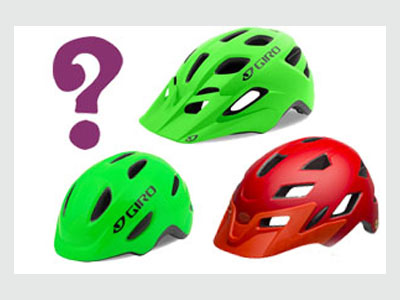
Wear a helmet that has been designed for the type of riding you are about to do.  E-Bikes give you the ability to travel at high speeds so we recommend a performance level helmet with great head coverage to protect yourself.  Choose the protection that will give you confidence and the knowledge that you have the correct gear to ride safely on the roads or trails you choose.

Check out our Adult Bike Helmet Buying Guide and our story The Best Helmet for an E-Bike

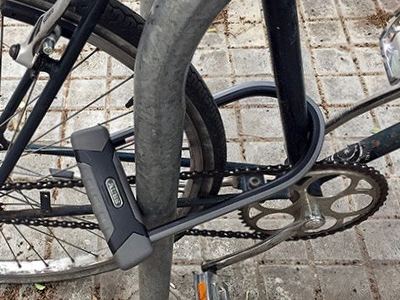
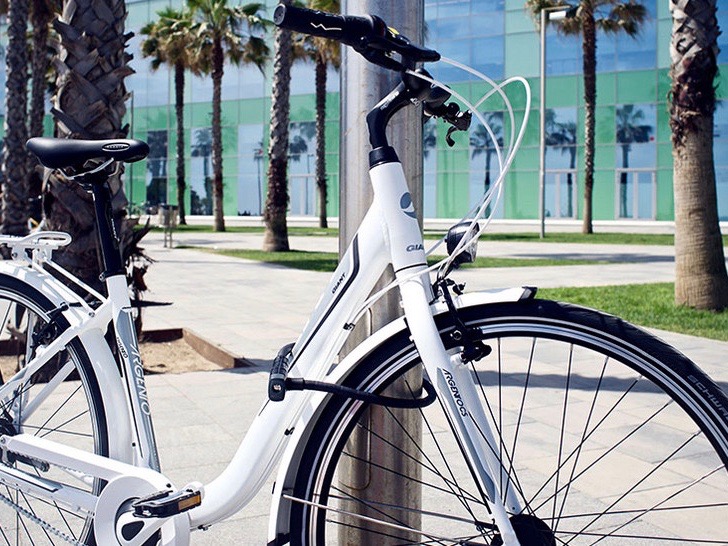
E-Bikes are targets for thieves.  You need a lock that will keep your bike safe when you are not around, including thinking about how it is protected at your home.  E-bikes can have larger frame sizes if this is where the battery is so you may not be able to use certain types of locks (small U-Locks will be a challenge).  We recommend a mid to high level security rating depending on the level of risk your environment has.  Please read more… The Best Locks for E-Bikes
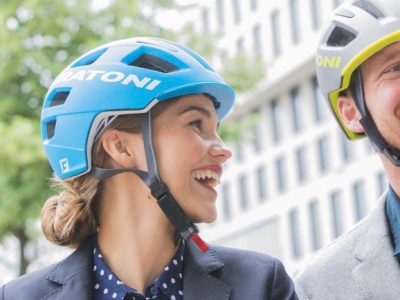
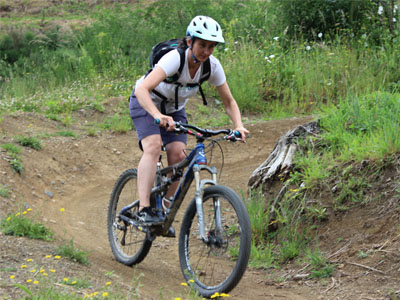
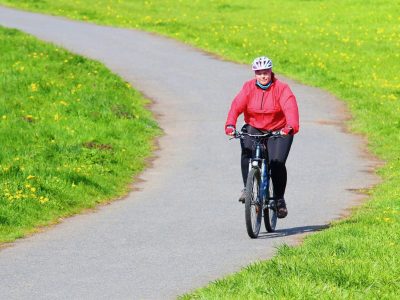
Easy trail/recreation riding

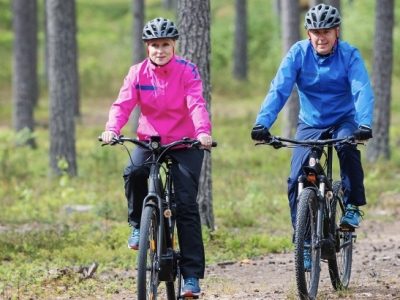
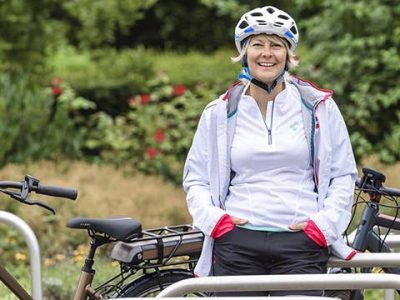
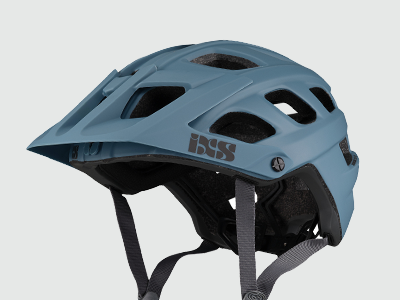
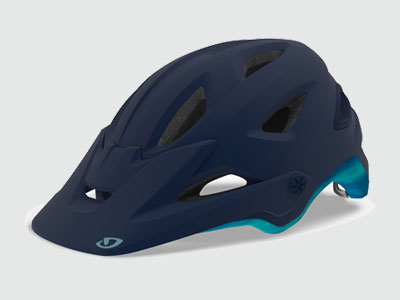
The ideal helmet for E-Bike riding should provide you with performance level protection.

Tip Two – Be Visible at Faster Speeds

Most people who own a bike find themselves riding along a road at some point.  Even if you prefer to ride off-road, to get to some trails or join trails, road riding will be necessary.  As you grow in confidence, hopefully, the idea of using your E-Bike for other trips will begin to appeal.  When on the road in traffic it is really important that you are easily seen.  At faster speeds it is important to ride in a predictable way and always ride defensively with the idea that the cars around you have not seen you.  Approach intersections with caution, try at all times where possible to make eye contact with a driver to ascertain whether they have seen you or not.

There are two things to think about to keep yourself safe as you ride at speed and approach cars & intersections faster than what may be expected: Lights & Clothing

Lights –  Quite often E-Bikes will come with lights integrated into the frame and connected to your battery.  If not or you want to add more you will need to do a bit of reading & research to understand what is best for the type of riding you do so read our Bike Light Buying Guide.  We recommend an easy to carry, easy to attach front & rear light set that suits the lighting environment you use your E-Bike in.  Using lights even during the day to attract attention is a good plan.

Clothing – Bright, colourful outer layers will help you to be seen on your E-Bike.  This includes your jacket, clothing, helmet, gloves…  For inspiration on visibility visit our Be Visible On a Bike Page. Being visible doesn’t need to mean wearing fluorescent yellow there are lots of stylish bright options on our Bike Clothing Page
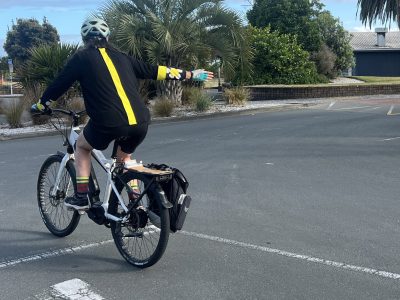
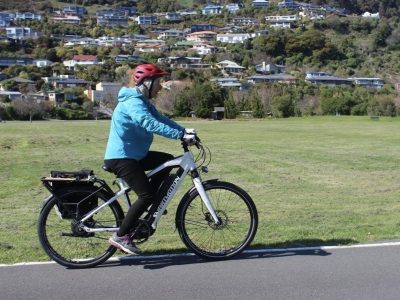
Riding an E-Bike in traffic

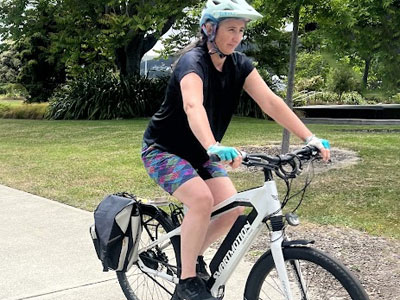
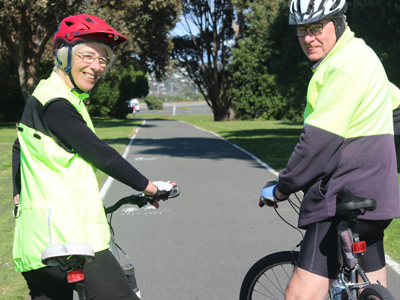
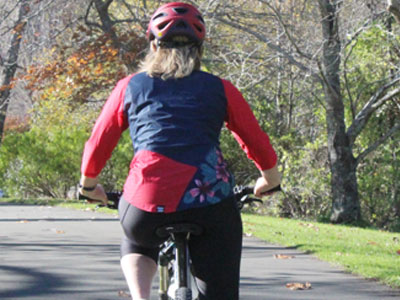
Wearing bright colours or bright patterns will help you to be noticed when you ride.

Tip Three – Carrying Weight is Easier

Adding weight to yourself or your bike tends to go unnoticed on an E-Bike as you have the advantage of assistance.  E-Bikes have strong frames and often come with an integrated or attached rear carrier.  You can therefore easily ride an E-Bike for a wider variety of reasons.  Carrying shopping, library books, kids (E-Bikes & Transporting Kids) or overnight gear is not as challenging as it is on a standard bike.

We have written a series of stories to help with how you would choose to carry gear, depending on the type of riding you are doing. Carrying Gear – Stories & Support

What you need to be safe when you ride depends on a number of variables… distance, the weather, how close to help you are.  Always try to keep your loads even and balanced… try not to put too much weight on your back as this will become challenging over time for any rider.

A couple of important things to always take with you:

Water – How much water you need to carry depends on a number of things; how far you are going, the access to drinking water, how much you sweat, how hydrated you where before beginning your ride.  For more detail on staying well hydrated please read our Hydration Buying Guide and the story on Hydration – Carrying Water When You Ride. As a general guide more is better  See shop hydration to understand your options

Food – Generally your energy output will be lower on an E-Bike but you are still using your body and are exposed to the riding conditions (heat/wind).  Any rides over an hour or any ride that involves a sustained challenging climb we would then recommend a snack before your downhill.  We always recommend taking food when you ride with children regardless of the time frame.  If your ride is over 2-3 hours this snack should become multiple snacks or a lunch.  Keeping your energy levels high is really important for your enjoyment and your ability to concentrate during the next phase of your riding.


Easy trail/recreation riding

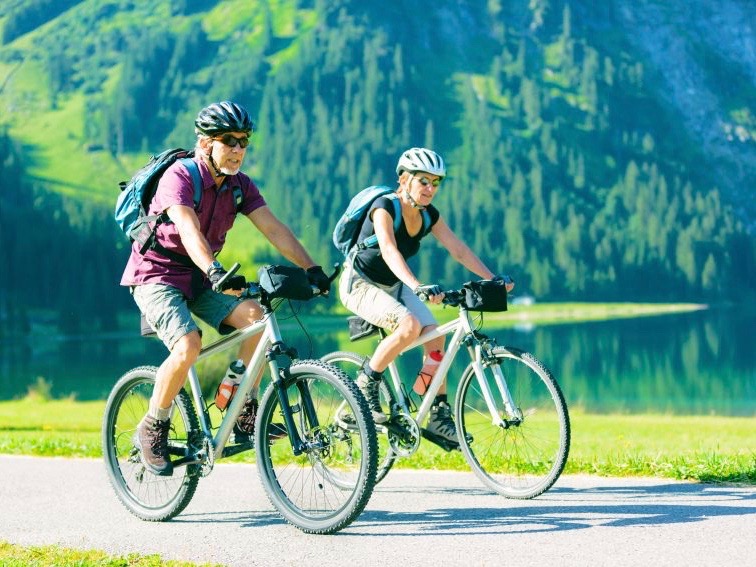
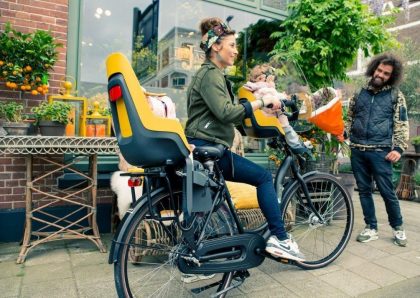
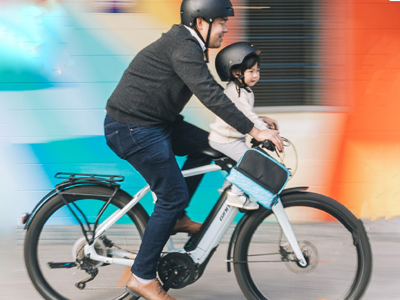
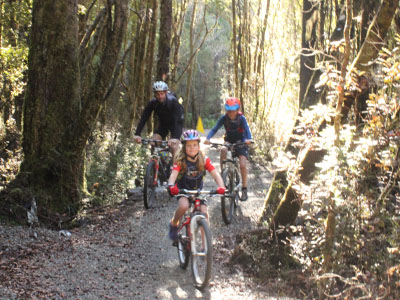
E-Bikes are ideal for using to ride with young kids either attached or towing them. 

Tip Four – Your Battery & Tools 

Do E-Bikes need special tools?   Generally no, but you do need to be aware of your battery and the power levels you have/distances you can ride. “Check & charge” should be your motto every time you get off your bike. Get into a routine or habit of charging and looking for charging points when you are out riding.  If you commit to owning an E-Bike you should be very aware of it’s capacity or the distance it will take you before the battery is drained.  Your battery won’t last for ever, the life of most batteries is 2-3 years so also be aware of this and take note of any decline in performance. For more information on E-Bike Tools read this story.

Carrying tools whenever you choose to go for a ride is a really important commitment to make to keep yourself safe.  This becomes even more important as you choose to ride bigger distances and if you get further from help – more isolated trails/tour riding. We recommend carrying;

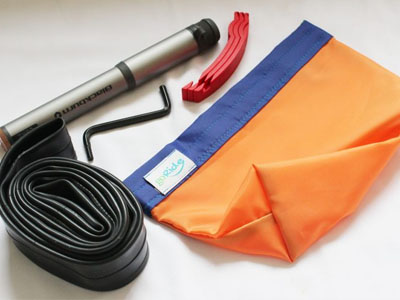
  • Tyre levers, spare tube, mini pump and/or puncture patches
  • Simple multi tool
  • Tape or security ties to fix, hold up battery cabling

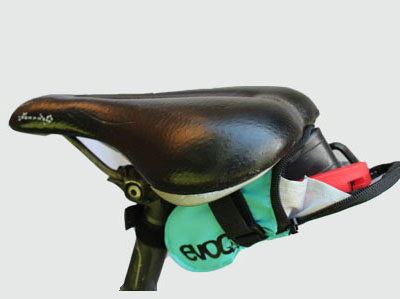
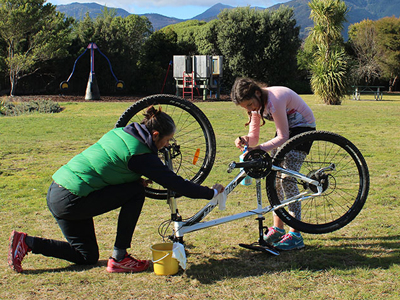
There are multiple ways you can choose to take tools with you.  Seat posts bags are a popular choice.  Tool wraps that can be placed in a backpack and will open up to easily display all your tools are a great idea.  You need to understand how to use what you carry so if you need some help with this please see the following resources we have created;

Five Simple Bike Tasks You Should Know, Tools & Kits to Carry, 

Keeping your tyres well pumped up is also important.  Check the pressure often and you will be less likely to get what is called a pinch flat.  The faster speeds you are moving at means you hit small bumps and rises with greater energy which can squash or compress your tyre and split the tube.

Tip Five – Comfort & Warmth

Your comfort while riding is a huge part of enjoying your time on an E-Bike.  It will also keep you protected & safe.  There are three key points where you make contact with your bike.  The seat, the handlebars and the pedals…

We have extensively covered bike seat comfort and the problems that can occur at this important contact point… View our COMFORT ON YOUR BIKE SEAT page.

Your bodies experience and temperature regulation will be quite different on an E-Bike.  You may find it harder to get warm and stay warm.  Any cold temperatures will be noticed immediately as you move through the air at a faster speed.  So this means E-Bike riders need to think about what to wear a bit more carefully than those riding standard bikes.  You will need more air flow protection and you may need to wear more clothing to stay warm.  Please read our story Keeping Warm on an E-Bike to get a better understanding of this important part of your riding.

youth mountain bike helmet

Your bike riding success is different to others… use our stories and support, get the right solutions.
Want more from your riding? 

Be supported to Ride as a Family, Progress Your Riding and/or receive Seasonal Inspiration. So you can SMILE when you ride.

All new members are automatically entered into our Seasonal Prize Draw.

SMILE when you ride

Support & Inspire other riders and families 

Share your riding outings, adventures and experiences on our quick and easy question and answer forms. Join us in helping others ride bikes. 

All entries are automatically entered into our Seasonal Prize Draw.

Bike Path or Trail Riding – Am I Safe to goRide?

Bike Path or Trail Riding – Am I Safe to goRide?

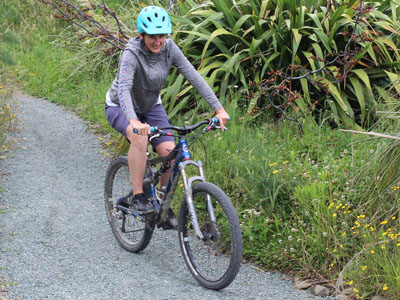
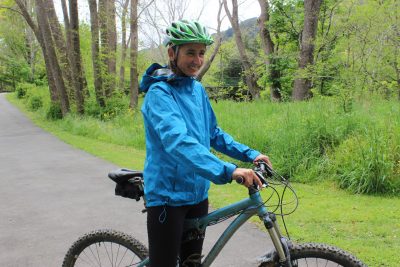
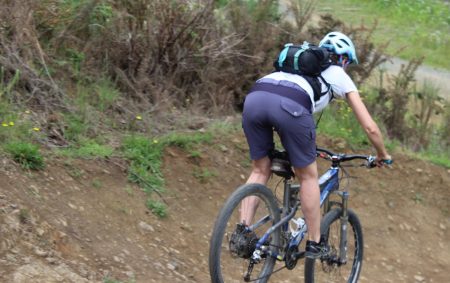
Bike path & trail riding is becoming more and more popular as great trail networks and systems are being built all over NZ.  Exploring our backyards in this way gives you the ability to connect with the outdoors and learn new skills.  To be safe, comfortable & confident you need to understand any risks and manage them.

Supporting you and your family to SMILE when you ride.
womens boyleg goUnders

Bike Path & Trail Riding Safety

To follow are some simple tips for achieving a good level of safety and protection when you ride.  To feel confident when out riding you should also be checking your bike before every ride.  This involves a quick 30 second scanning process.

For more information on doing a Pre-ride Bike Check please see our story. 

Tip One – Protection – Helmet & Gloves

Wear a helmet that has been designed for the type of riding you are about to do… Bike path, trail riding.   A helmet must fit your head well to work for you in an accident.  Choose basic to intermediate levels of protection depending on the risk level you ride at.  The biggest factor here is speed.  If you are riding on an E-Bike your speed will be greater so the protection you seek in a helmet should match to that. 

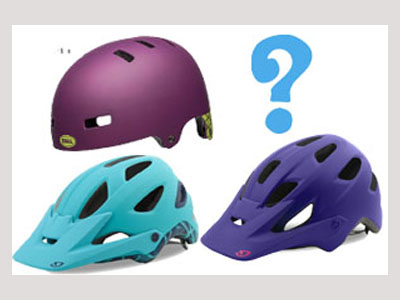
Check out our story Bike Path Helmets – What are the options?  

Gloves are another basic bike riding item that will give you protection and comfort.  As you increase your ride times gloves will help with absorbing vibration through your handlebars.  This is especially important if the trails are a bit rough. 

For more info on gloves see Why are Bike Gloves Important?

Easy trail/recreation riding

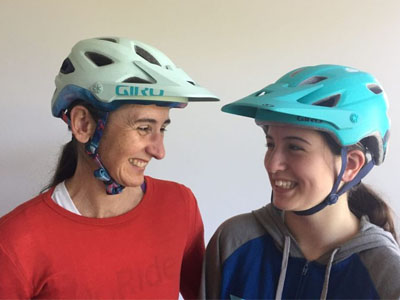
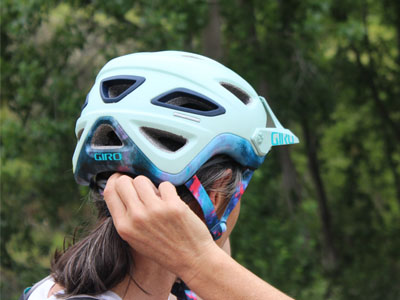
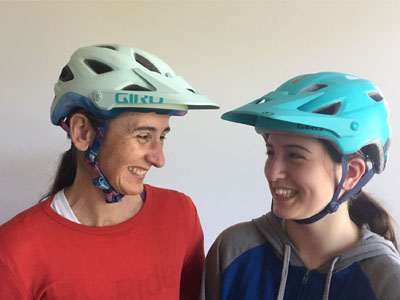
A helmet that is adjustable and the right size should be worn every time you ride

Tip Two – Tools & First Aid

Carrying tools whenever you choose to go for a ride is a really important commitment to make to keep you safe.  This becomes even more important as you get further from help – more isolated trails/tour riding.  You should be able to manage the basics by being able to fix a punctured tyre, adjust a seat or brake lever.  We recommend carrying;

  • Tyre levers, spare tube, mini pump and/or puncture patches
  • Simple multi tool

There are multiple ways you can choose to take tools with you.  Seat posts bags are a popular choice.  Tool wraps that can be placed in a backpack and will open up to easily display all your tools are a great idea.  You need to understand how to use what you carry so if you need some help with this please see the following resources we have created;

Five Simple Bike Tasks You Should Know, Tools & Kits to Carry, What’s in a Basic Tool Kit?

Riding easy off road trails requires a certain skill level and confidence.  Although not common you can have accidents & falls.  If you are riding further than 30 minutes from help, a new slightly technical trail that will challenge you or with children, we recommend carrying a Compact First Aid Kit designed for bike riders.  When you choose to do any kind of isolated day riding or isolated multi-day/tour riding a first aid kit is an essential piece of gear to carry.  See First Aid for Biking Buying Guide.

Basic First Aid for Bike Injuries

Tip Three – Carrying Gear

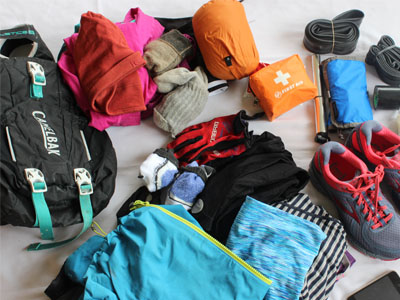
What you need to be safe when you ride on off road trails and cycleways depends on how far you are going and how isolated you will be.  It is also about the weather and how this weather will affect your body temperature.  Extra things to carry include food, water, clothing (and tools/first aid which we have talked about in the above section).

Food – For most rides under an hour you won’t need food.  Anything over this time or any ride that involves a sustained challenging climb we would then recommend a snack before your downhill.  We always recommend taking food when you ride with children regardless of the time frame.  If your ride is over 2-3 hours this snack should become multiple snacks or a lunch.  Keeping your energy levels high is really important for your enjoyment and your ability to concentrate during the next phase of your riding. 

Water – What you need to carry depends on a number of things; how far you are going, the access to drinking water, how much you sweat, how hydrated you where before beginning your ride.  For more detail on staying well hydrated please read our Hydration Buying Guide and the story on Hydration – Carrying Water When You Ride.  As a general guide more is better and this is why so many off road riders choose a hydration pack with a bladder – it allows you to carry more water than a drink bottle.

Clothing – Regulating your body temperature and keeping yourself dry is key to keeping safe and enjoying your ride.  Again this becomes more important as you choose to ride further away from populated areas.  Layering is a great tactic.  As you warm up you can take off outer layers.  Or in reverse, as the weather deteriorates you can add protective layers.  Fabrics that have the ability to wick & breath are important so that you and your clothing remains dry.  Often you will be sweaty & hot at the top of a climb.  After resting, to prevent a chilled feeling from airflow on the way down, adding a lightweight/wind protecting jacket or vest is ideal.  The worst combination is being cold & wet this is why we recommend quick dry fabric or merino base/mid layers with breathable but waterproof outer layers. For more on hypothermia and its dangers please read this story.  First Aid & Emergencies When Bike Touring

Tip Four – will you get caught in the dark?

Most off road trail riding is best done during the day.  A lot of the enjoyment from doing this riding is about taking in the scenery and enjoying your surroundings. These trails and tracks are not set up with street lighting so you will be completely in the dark if caught out.  There are two things to think about to keep yourself safe if you think you may ride at night; warmth & lights.

Lights – You will need to do a bit of reading & research to understand what is best for the type of riding you do so read our Bike Light Buying Guide.  We recommend an easy to carry, easy to attach front & rear light set that is powerful enough for you to see by – a Night Riding Set.

Warmth – See the section on clothing above for advice on layering and fabrics.  Take special care to keep your extremities warm; fingers, toes & ears.  So think thermal & merino for gloves, socks & headbands or beanies.  Winter Warmth for Riding Combo

Tip Five – Comfort & Contact Points

Your comfort while riding is a huge part of enjoying your time on the bike.  It will also keep you protected & safe.  There are three key points where you make contact with your bike.  The seat, the handlebars and the pedals…

We have extensively covered bike seat comfort and the problems that can occur at this important contact point… View our COMFORT ON YOUR BIKE SEAT page

youth mountain bike helmet

Your bike riding success is different to others… use our stories and support, get the right solutions.

Support and inspire other riders and families to ride

Share your riding outings, adventures and experiences on our quick and easy question and answer forms. Join us in helping others ride bikes. All entries receive a free shipping coupon and go into our seasonal prize draw.

goRide supporting women and families to SMILE when you ride

Bike Helmets – What is MIPS?

Bike Helmets – What is MIPS?

MIPS stands for Multi-directional Impact Protection System. Not all bike helmets have MIPS. Lets have a look at what it is, what it does and whether you feel it is important for you to have a helmet with MIPS.

Supporting you and your family to SMILE when you ride.

tow rope

What is it and why is it important?

MIPS stands for Multi-directional Impact Protection System. MIPS is the latest advances in bike helmet design to reduce head injuries during an impact to the head. MIPS has been developed by collaboration between leading brain surgeons and scientists and helmet manufacturers.

The design is based on mimicing our own protection system.

Our system – our brain is suspended within our skull by a fluid called Cerebral Spinal Fluid. Our brain is floating within the skull. This allows the brain to move in any direction during an impact and helps absorb the forces from the impact ( especially the time to peak force – so its slows the acceleration of the force) . ,,,so clever!

MIPS mimics this by using a slip-plane system that moves inside the helmet. This layer is designed to rotate inside the helmet to reduce the amount of energy transferred to the head and slowing the acceleration of the force.

Testing has shown that if we reduce this acceleration of the force, we might help both reduce the risk of brain injury and its severity. 

Where in the Helmet is it and how do I know my Helmet has it?

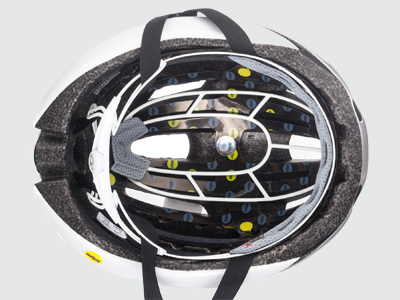
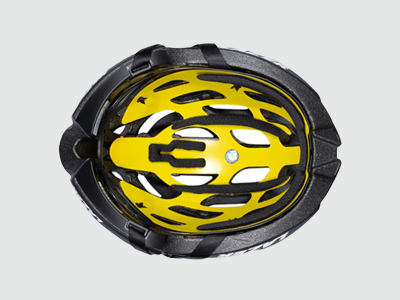
A MIPS-equipped helmet looks almost identical to a non-MIPS-equipped helmet except for when you look inside, you will see a thin liner beneath the pads. From the outside, the only indicator that the helmet is any different to one without MIPS is that some brands have a small MIPS logo on there. Have a look inside your Helmet can you see a thin layer. 

You won’t even feel a difference when wearing a MIPS-equipped helmet compared to a helmet that does not have MIPS. 

MIPS logo that may be located on the outside of the helmet.

Clear MIPS system wtth logo over it.

Yellow MIPS system

Do I need a helmet with MIPS?

MIPS Helmets cost more than a helmet without MIPS.. So do you need it?

Anything that helps support your safety is worth investing in. The best way to determine if you want to invest in MIPs is understanding your risks on a bike.

What are your risks of being involved in an impact. Do you bike in traffic, do you bike at speed ( E-Bikes/ riding downhill) do you ride on challenging terrain ( off-road), do you bike regularly then your risk profile is higher and a helmet with the best protection is advised.

Investing in your safety is worth it.

An overview of MIPS by Giro (Bike Helmet Manufacturer)

Your bike riding success is different to others… use our stories and support, get the right solutions.

Support and inspire other riders and families to ride

Share your riding outings, adventures and experiences on our quick and easy question and answer forms. Join us in helping others ride bikes. All entries receive a free shipping coupon and go into our seasonal prize draw.

goRide supporting women and families to SMILE when you ride

When to replace your Bike Helmet

When to replace your Bike Helmet

Helmets do need to be replaced. Know when to replace your helmet so you have the confidence that your Bike Helmet is going to keep you safe if you have a fall / an impact when riding.

Supporting you and your family to SMILE when you ride.
tow rope

When it does not Fit.

You cannot compromise on fit of a Bike Helmet. The Helmet needs to fit – right now and you must have the confidence that it will stay on and over your head in an impact.

Needing a new helmet due to fit is most relevant to kids who ride as their head size is changing. Don’t be too alarmed though our heads do not grow like our feet, you do not go through helmet sizes like shoe sizes. We are born with quite big heads and it is probably the part of our body that grows the least. From a sizing point of view your child will only likely need 3 at most 4 different helmet sizes in their time of biking from a toddler through to an adult.

See out Size and Fit Guides for understanding the correct fit of a bike helmet and how to adjust the helmet to your head. If your helmet is unable to be adjusted so that it is LOW,( less than 2 fingers above your eyebrows)  LEVEL ( sits level all the way around your head) , SNUG and STABLE ( do the wriggle test – make sure the helmet will remain over your head in an impact) tehn you need to replace your bike helmet.

After a crash or Impact

After any type of crash or impact the foam liner can become damaged. The challenge with impacts to your helmet is that it is very hard to determine whether the integrity of the foam has been damaged and so the rule is

After any type of crash or impact = Replace your Helmet. See below for more information on how to check your foam liner.

Deterioration of the components of a Bike Helmet

Shell –  Look for cracks or abrasions.  Are there any cracked edges. Check for fading, UV exposure can make the shell brittle.  Any compromise to the integrity of the shell will mean it may not hold together in an impact.

Liner – The foam. Press carefully over the shell of the helmet to see if there is any movement. Some helmets there will be no movement others a little movement, you are looking for any area that there is a variation in movement compared to the rest of the helmet. An area of greater movement indicates damage to the foam under the shell. Turn over the helmet and check the liner for cracks or compressed foam. If you suspect any area of compression check and measure the thickness of the foam at the same spot on the other side of the helmet.

Straps/buckles/clips and fasteners –  check for wear and tear. Any loose stitching or fraying. Check buckles/clips and fasteners do they work and hold – buckle or fasten and then give them good forceful tugs and twists to check they don’t come apart. Think about the force they would be under during an impact or multiple impacts eg car and road. You want to  mimic that force, you need to know that they will work to keep that helmet securely on your head in an impact.

After a certain time

If the above 3 reasons have not resulted in you replacing your helmet for a while ..then it might be just time. There is no golden rule here…because how regularly we use our helmets and what we expose them to is different for everyone. Just be aware that the components will deteriorate with time and sometimes you may not be able to see the damage…so if you feel like you haven’t replaced your helmet in quite a while then it might be time. As a guideline we say every 3-4 years for regular riders.

Your bike riding success is different to others… use our stories and support, get the right solutions.

Support and inspire other riders and families to ride

Share your riding outings, adventures and experiences on our quick and easy question and answer forms. Join us in helping others ride bikes. All entries receive a free shipping coupon and go into our seasonal prize draw.

goRide supporting women and families to SMILE when you ride

Kids/Youth Mountain Biking Helmets – What are my options?

Kids/Youth Mountain Biking Helmets – What are my options?

To help keep kids and youth safe when mountain biking their helmet needs to match the level of mountain biking they do. Lets discover your options. Have a read and understand what helmet would best suit your child.

Supporting you and your family to SMILE when you ride.
tow rope

Head Size and Growth

A kids head grows and changes.  Each child will have different rates of growth and times when they are growing.  So you can’t just guess size, you need to get a helmet that fits them now, not something they can grow into.  Once you have the correct size helmet you need to fit it correctly to your child’s head shape.  Most 6 yr olds have a fully grown head (this is an average your child may be different), from here on their face structure will grow and change but you will notice very little difference in their head circumference.

What this means for helmet buying is that children as young as 6yrs old may not grow out of their helmet (it is likely that wear and tear will drive change rather than growing out of the helmet).  It also means that youth can wear adult helmets to match their type of riding and level of performance, especially on a mountain bike.


Your Mountain Bike Helmet Options:

  • Kids/Youth Mountain Biking and All Round Helmet (add a rear light for on road use)
  • Youth Recreation and Mountain Biking
  • Youth Mountain Biking
  • Youth Advanced and Downhill Mountain Biking
  • Youth Downhill and Racing Mountain Biking

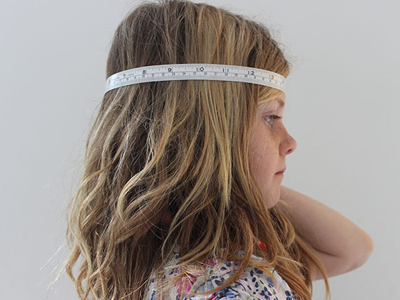
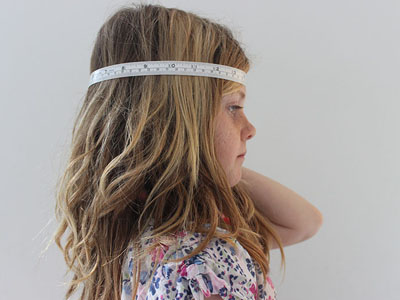
Knowing your child’s head circumference can help you understand your options. Learn how to measure here.

Kids Mountain Biking – All Round Rider

Best Suited to – kids who enjoy riding trails. Optional pop in light for the rear vent makes this a great all round helmet.

Age Range – approximately 6yrs plus.  Size Range – 50 to 57cm (kids), 54-61cm (youth).

MUST have features:  Full head coverage (a shape that resembles a human head and goes low at the back of the head) including MIPS (multi directional impact) protection.  Strength and durability, ability to absorb impacts created by in mold construction & liners.  Easy to use fit systems that provide the ability to have a secure & stable helmet every time it is put on a head.

GREAT to have features: Good ventilation & quick dry padding for sweat and temperature management, easily removed for washing.  Visor removability.  Ability to add a rear vent light for on road/in traffic riding.

Recommendation – As your child steps up to the challenge that is mountain biking so should their helmet step up in its ability to protect their head.  The Giro Tremor does just that.  It has the best dial fit system we could find in a kids helmet along with the added protection of MIPS technology.  The internal pads are made from the same fast drying, sweat wicking fabric as adult Giro helmets.  Eighteen vents & 5 airflow channels throughout the full head coverage design allows for great air movement and keeps the helmet lightweight (306grams).  It also has an optional rear vent light to assist with visibility in traffic – school commute riding, activities/sports practices.

Youth Recreation & Mountain Biking

Best Suited to – Youth who enjoy all types of recreation riding from the road to the trails.

Age Range – approximately 10 years plus. Size Range – Small 49-54cm, Medium 54cm- 58cm, Large 58-62cm.

MUST have features:  Full head coverage (a shape that resembles a human head and goes low at the back of the head) including MIPS (multi directional impact) protection.  Strength and durability, ability to absorb impacts created by in mold construction & liners.  Easy to use fit systems that provide the ability to have a secure & stable helmet every time it is put on a head.

GREAT to have features: Good ventilation & quick dry padding for sweat and temperature management, easily removed for washing.  Visor removability.  

Recommendation – When your teenager chooses to ride a bike all over town during the week and spends time off road in the weekends you want a helmet that is up to the task of being well used.  These helmets deliver on all the features we ask you to find in a performance helmet.  They have extended rear head coverage yet are lightweight.  It provides ideal impact protection with its increased dense shell strength.   It has an easy to use fit system  Three sizes also helps with getting a helmet to fit their head correctly.  MIPS is another element of protection from impacts at angles.  This will help when preteens/teens start exploring intermediate and advanced off road tracks.

Youth Mountain Biking – Performance

Best Suited to – Youth who enjoy all types of Mountain Biking, up to advanced levels.

MUST have features:  Full head coverage (a shape that resembles a human head and goes low at the back of the head).  Full wrap in mold construction will give additional durability & strength to a helmet. At this level of performance MIPS should be included. Lightweight and easy to use adjustable fit system so the helmet is secure and stable on your head.

GREAT to have features: Good ventilation & sweat absorption, full goggle integration and camera mounting capabilities.

Recommendation – As you begin to ride more often and gain better skills, the tracks you expose yourself to tend to get more technical.  Your helmet needs to match your growing skill level giving you peace of mind as you try new stuff or simply go at greater speed.  The Giro Source helmets are built for repetitive use across all types of mountain biking.  Greater durability from better wrapping, layered in mold construction.  Lightweight fit system as well as MIPS.

Size Range – Small 51-55cm, Medium 55-59cm, Large 59-63cm, X-large 61-65cm.

Youth Advanced and Downhill Mountain Biking 

Best Suited to – Youth that challenge themselves in the mountain biking environment.

MUST have features:   Strength and durability created through wrapping/fused in mold construction and layering of liners. Ability to absorb impacts along with a advanced MIPS system. Chin bar for full 360 protection.  Top of the line, durable fit system.

GREAT to have features: Brow airflow & technical fabric used on padding. Removable, tool free chin bar giving you 2 helmets in 1.  Goggle compatibility and breakaway camera mounting.

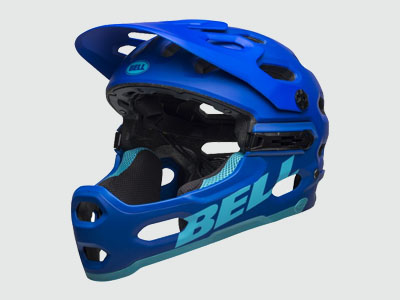
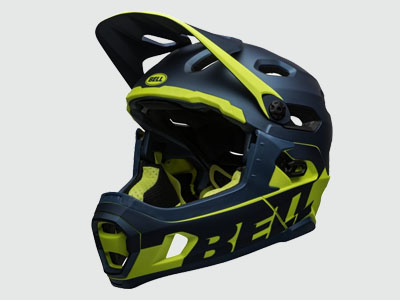
Recommendation – This helmet adapts to every mountain bike riding situation you will find yourself in.  Easy to remove, no tools required, chin guard allows you to ride without this added protection – basically you get 2 helmets in 1.  The best Bell has to offer in a Float Fit system to get a secure, safe, comfortable fit.  Add in MIPS and you have a top performing yet lightweight helmet.  Excellent airflow and technical fabric helps with temperature management.  Complete goggle integration and break away camera mounting.

Size Range – Small 52-56cm, Medium 56-59cm, Large 59-62cm

Youth Downhill and Racing Mountain Biking 

Best Suited to – Youth that race and challenge themselves in the mountain biking environment. 

MUST have features:  Certification for downhill racing – ASTM 1952 testing.  Wrap around chin bar.  A MIPS system with additional features for top of the line energy management. Strength and durability created by full wrap, layered in mold construction & liners.  Easy to use fit systems that provide the ability to have a secure & stable helmet every time it is put on a head.

GREAT to have features: Removable chin bar, breakaway camera mount, top of the line padding system that ensures comfort with a well fitted full face helmet.

Recommendation – This helmet has ASTM F1952-00 & ASTM F2032-06 certification which passes testing required for downhill racing.  This means it is one of the toughest helmets in the market place and a great option for top of the line protection.  Ideal if you’re racing and pushing the limits but also for those riders who can afford the best protection.  Good investment for anyone who has neck/head issues and requires the peace of mind the best will give you.  Remember this helmet can be worn without the chin guard.

Size Range – Small 52 to 56cm, Medium, 55 to 59cm, Large 58 to 62cm

Keep them safe with Helmet Care and Checks

As you may have gathered from reading the information above it is not enough just to get the right size helmet for your child or teenager you must also take the time to fit the helmet to their head shape.  This involves getting it low, level, secure & stable…

PLEASE READ How to Size & Fit a Kids Bike Helmet or How to size and fit an Adult Bike Helmet


WHEN TO REPLACE A HELMET
  • when it becomes too small – refer above, it needs to fit down onto the head, maximum 2 fingers above eyebrows
  • after any type of crash or impact.  If the helmet has done its job it will have absorbed the force of the incident so if they say they hardly knocked their head or didn’t feel it bump, it doesn’t mean the helmet is safe to use again
  • the more it’s used the more it will deteriorate. Every time it is dropped or bumped or absorbs vibrations it is reducing its ability to protect them!  A rough guide line for well used quality kids helmets is 3-4 years
INSPECTION & SAFETY
  • regularly inspect for damage, wear & tear, cracks, splitting, dents, the shell separating from the liner, breakage in the MIPS, fraying straps, broken buckles
  • never remove a MIPS from the helmet
  • replace the pads to ensure good fit over time
  • store in a safe place out of direct sunlight
WASHING
  • gently with warm soapy water.  Pads can be removed and placed in a washing machine but do not put in a tumble drier
  • do not put helmet in the dish washer (can’t believe I just wrote that bit of advice but there you go)

Your bike riding success is different to others… use our stories and support, get the right solutions.

Support and inspire other riders and families to ride

Share your riding outings, adventures and experiences on our quick and easy question and answer forms. Join us in helping others ride bikes. All entries receive a free shipping coupon and go into our seasonal prize draw.

goRide supporting women and families to SMILE when you ride

The Best Locks for an E-Bike

The Best Locks for an E-Bike

E-Bikes can be attractive targets for bike thieves. If you are using your E-Bike often it will be at risk of being taken from you.  Get the bike lock that is right for you and have confidence that your bike is safe.

Supporting you and your family to SMILE when you ride.
handlebar bag

Environment your E-Bike is left in

High risk vs low risk.  If you are considering investing money in an a bike lock for your E-Bike you need to be buying for it’s greatest risk.  This is usually busy urban areas or when you are leaving your bike for long periods of time.  Is your bike secure in your home environment where it is stored for long periods of time?  Chain locks combined with wall or ground anchors are a great option for this at home or all day at work scenario. 

Will you have a good choice of ‘fixed’ objects to choose from?  There are usually a good selection of bike racks in most down town areas, along with sign posts and power poles.  Avoid locking your E-bike to a wire fence that can be easily cut.

Does an E- Bike Lock need to be different to a lock for a standard bike?

While the lock does not need to be a special lock we do recommend a mid to high risk lock with the design features that make it difficult to cut or break open.  The more expensive your bike was the more attractive it will be to thieves so also take this into consideration.  Certain brands of locks are really good at what they do, ABUS consistently get very high security ratings as do HipLok.  On Guard are good at great locks for reasonable prices.

You do need to be aware that E-Bikes often have larger, thick frames so small D or U-locks may  not be an option.

Features of an E-Bike Lock (Mid to High Risk)

Materials – strong, durable, thick.  Steel and hardened cables.  What are the weak points of your lock.  The pivots on a folding lock need to be high quality for it to be a worthwhile investment.

Design – The shape of the bike lock should give you good options in terms of space or length.  Being able to fit a thick part of your E-Bike frame to a sturdy fixed object gives you options.

  • silver, gold or diamond security ratings
  • portability, ease of carrying
  • good opening space or length


Locks We Recommend for Using with E-Bikes

Chain locks have the best security ratings but are heavier to carry.

U-Lock with large internal space, portable and strong

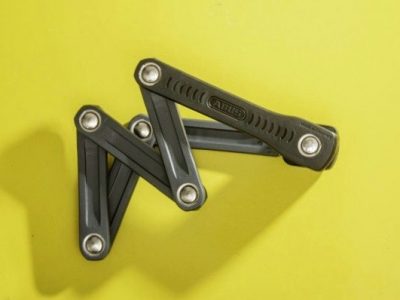
Folding locks have a lower security rating but they are great with unusual shapes and fold down to be easily carried

Your bike riding success is different to others… use our stories and support, get the right solutions.

Want more from your riding? 

Be supported to Ride as a Family, Progress Your Riding and/or receive Seasonal Inspiration. So you can SMILE when you ride.

All new members are automatically entered into our Seasonal Prize Draw.

SMILE when you ride

Support & Inspire other riders and families 

Share your riding outings, adventures and experiences on our quick and easy question and answer forms. Join us in helping others ride bikes. 

All entries are automatically entered into our Seasonal Prize Draw.

Time on an E-Bike – Can your body cope?

Time on an E-Bike – Can your body cope?

Riding an E-Bike is a very rewarding way to explore your environment.  Exploring off road tracks & trails or doing all your chores & shopping around town.  Greater time on a bike can however put a strain on your body. 

To be safe, comfortable & confident on an E-Bike you need to understand the risks and build up slowly.

Supporting you and your family to SMILE when you ride.
handlebar bag

Frequency of E-Bike Riding & Your Body

“People travel twice as much on the electric bike (as on a regular bike), both in terms of kilometres, amount of trips, and as part of the total transportation. The effect of having an electric bike was particularly strong among women. They did far more trips with their E-bikes than men did. Men, on the other hand, often went for longer trips once they were out cycling.” Aslak Fyhri – Institute of Transport Economics

So E-Bikes give you the ability to ride more places, more often but can your body keep up?  It may not be as physically demanding on your aerobic system and your pedalling muscles may not need a great deal of strength but there is more to riding in terms of impact on your body.  You where not designed to straddle a bike seat so your body needs time to build up resilience to this unusual experience.

Contact Points on an E-Bike

Anyone who rides a bike needs to interact with it at three different points. These points play a big part in how comfortable you will be while riding.  As you spend longer on your bike the interaction becomes more important.  Let’s take a look at each of these three points so you can enjoy the time you spend riding.

The Saddle (Seat) – The place where you sit on the bike is very important for your long term enjoyment of riding.  If you don’t have the right saddle or experience any sort of pain in this area it can make riding a misery.  For women riding E-Bikes we recommend having a gender specific saddle with a cut out.  It will need to be durable and designed to be suitable for the type of E-Bike riding you do most regularly.   Find out more about E-Bike Saddles at: The Best Saddle for an E-Bike 

The Handlebars – Where you grip the bike with your hands and therefore steer.  Your handlebars should rise slightly to meet your hands and ideally the grip surface needs to be secure and give you a great sense of control.  Because women have smaller hands we need a smaller diameter grip.

The Pedals – E-bikes will have square looking flat pedals to provide a good grip surface for your feet.  To have secure contact at this point again gives you a sense of control and being in contact with your bike.

The Saddle & Your Comfort

Common complaints from E-Bike riders cover the full range of problems someone can have with a saddle especially if you are using your E-Bike daily.  Chaffing, genital pressure, sit bone aches, tailbone bruising…

Any issues that were going to happen will happen faster with increased riding time.  Try not to ride yourself into these problems.  No amount of pain or numbness or unbearable discomfort should occur.

Endurance vs Recreation – Different materials used in a bike seat (saddle) will provide cushioning and support for different lengths of time and how regularly you ride.  The padding should be very supportive for longer times on the bike.  Any rides over 45mins to an hour become endurance level, and if this type of riding is done regularly which often happens on an E-Bike, you are an endurance rider.

Further Reading:

The Best Saddle for an E-Bike

Seat Adjustments – tips on how to correctly position your seat


Women riding bikes

The saddle is an important contact point – take the time to get it right

Common complaints from E-Bike riders cover the full range of problems someone can have with a saddle especially if you are using your E-Bike daily.  Chaffing, genital pressure, sit bone aches, tailbone bruising…

Any issues that were going to happen will happen faster with increased riding time.  Try not to ride yourself into these problems.  No about of pain or numbness or unbearable discomfort should occur.

Endurance vs Recreation – Different materials used in a bike seat (saddle) will provide cushioning and support for different lengths of time and how regularly you ride.  The padding should be very supportive for longer times on the bike.  Any rides over 45mins to an hour become endurance level, and if this type of riding is done regularly which often happens on an E-Bike, you are an endurance rider.

Further Reading:

The Best Saddle for an E-Bike

Seat Adjustments – tips on how to correctly position your seat


Your Body Position & Your Comfort

Good weight transfer and position on the seat through ‘A’ body shape and core strength is essential for E-bike riders.  You need to be thinking about your body and making constant slight adjustments.  The longer you spend on the bike the more tired your body will become and it can slip into bad posture, be inefficient and create pain in areas like your lower back, knees and your neck.

Straight back, open chest, relaxed shoulder and elbows… learn about these simple cues and what they mean.

Further Reading:

‘A’ Body Position – Chi Riding

Core Strength – Chi Riding

Women riding bikes

Check in regularly with your body position

Add Padding for Comfort & Protection

Add padding by wearing padded bike pants or padded bike underwear.  Match this padding to the length of time you will be riding for.  This will probably be endurance padding as your E-Bike allows you to ride like an endurance rider sooner than a standard bike would.  See our Padded Bike Pants Buying Guide

Don’t forget about your hands.  Bike gloves that have a good level of padding will keep your hands well connected to your handlebars but protected from the pressure of weight.  There should be a 70% to 30% split of weight transfer on your seat and on your handlebars.  Again with greater ride times an endurance glove is the right choice.  See our Bike Glove Buying Guide

Time & Frequency Guide

Once you have sorted out all the things that can give you the best possible comfort and protection when you ride… it is time to do the riding.  So how do you get the right balance between riding regularly but not over doing it or stressing anything?

Great question… but not easily answered.  There are levels of fitness to consider and whether this is your first time on a bike in a while or the first time ever.  For simplicity we are going to assume you are beginner.

Week One:  First rides should be short 20-30 minutes.  It is better to be shorter and go more often, 2-4 times in the week.

Week Two:  Add 10-15 minutes to the length of your ride.  Again 2-4 times in the week is plenty.  Try to have rest days in between each ride.

Week Three:  This is the week to try what you would consider a big ride, any thing up to or over 45mins to an hour.  Have 2 days off the bike after this ride.

Week Four:  Increase both your frequency and time.  You should be reaching a place where you can choose to ride whenever you feel like it.

From here, to gain fitness or train for a special trail or tour, increase your time on the bike with 1-2 rest days after.  As you become fitter, you can increase the frequency until you are comfortable riding daily over big distances.

Have a good routine while on your bike of checking in and being aware of how you feel.  Change your position, even if it is just a slight movement.  No ones body enjoys being static for too long and movement will insure that nothing is being compressed for too long and that your blood is flowing and reaching all the areas it should be.  While you are building up, stop more often than you need to when you are out riding.  Take a water break or just stop and look at the scenery – get off your bike and have a bit of a walk around.  This changes the muscles you are using and gives your body a moment to reset.

In between your rides take note of how your body feels.  Have you recovered quickly?  Are any muscles or areas of your body sore?  Acknowledge what riding an E-Bike is doing to your body.  Can you support yourself in a better way?  If you are due to go for a ride again but still feel pain or a high level of discomfort you may need to reconsider.  Would one more days rest be a good idea?  If you do go out on your E-Bike and find you are not comfortable after 5-10mins, turn around and head home.


Your bike riding success is different to others… use our stories and support, get the right solutions.

Want more from your riding? 

Be supported to Ride as a Family, Progress Your Riding and/or receive Seasonal Inspiration. So you can SMILE when you ride.

All new members are automatically entered into our Seasonal Prize Draw.

SMILE when you ride

Support & Inspire other riders and families 

Share your riding outings, adventures and experiences on our quick and easy question and answer forms. Join us in helping others ride bikes. 

All entries are automatically entered into our Seasonal Prize Draw.
UTI and Thrush – Does cycling cause these infections?

UTI and Thrush – Does cycling cause these infections?

To ride a bike you must make contact with a saddle.  The interaction of your body and this part of the bike is a very important part of enjoying your riding.  Common female complaints like UTI or Thrush can be made worse by cycling.  Let’s learn how to deal with that.

Supporting you and your family to SMILE when you ride.
bike pants - recreation

Infections & Cycling – Will riding my bike cause problems?

Unfortunately female cyclists are more prone to a Urinary Tract Infection (UTI) than the average population.  This makes sense when you understand that a UTI is caused by bacteria entering your urethra.  When we ride a bike there can be a build up of heat, sweat, friction and pressure where we sit on the saddle.  Which is the perfect breeding ground for bacteria.  Signs that you have a UTI vary but a burning sensation or pain with urination is common, along with an increased need to go to the toilet only to find a few drops is all that will painfully come out.

Thrush is another infection that is caused by the build up of bacteria & yeast in the vagina.  Again bacteria flourishes in warm, wet environments so anyone prone to Thrush should be aware that cycling creates this situation.  Symptoms of a Thrush infection include burning or itching, redness, a white discharge.

So we have established that when we ride for prolonged periods of time there is a likelihood that we will be producing more bacteria.  This does not have to led to issues, it will not necessarily cause problems.  If we are aware and have some knowledge we can manage the situation and minimise the risk that comes with bacteria building up.

UTI and Thrush - cycling

Time on the bike can increase bacteria growth

How to Reduce the Likelihood of an Infection

No knickers when riding – cotton absorbs sweat so when worn against your body when you are sweating it will get wet.  Another layer of fabric in this area promotes heat and can cause friction, all things you don’t want.  We recommend using a chamois against your skin.  They have been designed to pull moisture away from your body, encourage air flow and many have anti-microbial properties.

Clean chamois – when you wear a padded pair of shorts, pants or underwear against your skin it should be clean.  So wash your padded pants/underwear after every ride.

Get out of your sweaty gear – as soon as possible after you have finished your ride get out of your riding clothing and shower.

Change your undies regularly – when off the bike, choose breathable cotton underwear and change them regularly.  After showers, when you get up in the morning, after any exercise.  Fresh & clean.

Natural products – fragrance free around this area is best. Shower gels, soaps and lotions. Fragrances can cause dryness and irritation around the urethra or vagina opening which can lead to the attraction of dirt and bacteria.

What to do if you get an infection

Do all of the things in the list above but also seek medical advice from your GP or at a pharmacy.  The usual treatment will be a few days of antibiotics, lots of fluids and rest.

Water – drink plenty of water so you are flushing out your urinary tract on a regular basis

UTI & Cranberry Juice – lines the bladder with a film making it difficult for bacteria to stick.  Is full of vitamin C and anti-oxidants that will help with inflammation.  Make sure you choose a natural, low sugar version.


Good hygiene habits will help prevent infections

Your bike riding success is different to others… use our stories and support, get the right solutions.

Support and inspire other riders and families to ride

Share your riding outings, adventures and experiences on our quick and easy question and answer forms. Join us in helping others ride bikes. All entries receive a free shipping coupon and go into our seasonal prize draw.

goRide supporting women and families to SMILE when you ride

Chaffing, Sores & Your Bike Saddle

Chaffing, Sores & Your Bike Saddle

To ride a bike you must make contact with a saddle.  The interaction of your body and this part of the bike is a very important part of enjoying your riding.  Chaffing and saddle sores can really effect your ability to get back on your bike. 

Supporting you and your family to SMILE when you ride.

What Causes Chaffing & Saddle Sores?

Chaffing is caused when 2 structures repetitively rub causing friction and heat. You may feel burning sensations, redness, infected hair follicles, raw skin, blistering or lumps. This can be common on the inner thigh, between the butt checks or on any area that contacts your bike seat especially weight bearing areas.  If left unchecked or because you are spending a lot of time/consecutive days on the bike these symptoms can turn into what are known as saddle sores.

It is important to identify chaffing early on so be aware during and after rides, check for any symptoms. If you have had any type of change; a new bike saddle, a different set up or bike, change in the frequency or time on the bike… this is the time to be vigilant and do a post ride check in with your body.

How to reduce or prevent chaffing.

Saddle Set Up – how your saddle is set up effects your ability to sit on it and what pressure points are created.  You should be taking weight through boney structures.  Make some adjustments to see if you can help resolve your issue.  Please read…  Saddle Position – Height, Tilt and Reach

Saddle Shape – if you are experiencing inner thigh chaffing you may have the wrong saddle shape for the type of riding you are doing.  As you do more repetitive pedalling your saddle shape needs to allow space for this leg movement.  If your chaffing is on or around your sit bones you need to check that the width of your saddle is correct.  How do I Know what Width my Saddle should be?

Padded Pants – clothing with seams on areas of friction, like the inner thigh or made from cotton is not ideal if you want to ride for greater distances on your bike.  Padded bike underwear & pants were designed to prevent chaffing and help with comfort and protection at your weight bearing points.  One of the biggest causes of chaffing is wearing normal underwear with your bike padding.  Don’t do this the chamois (padding) should be against your skin so it can do the job it was designed for.

Regular Washing – please make sure that any garments you are wearing between you and your bike seat get regularly cleaned.  Every time they are used they will need to be washed.  This reduces the build up of bacteria that can infect raw skin and lead to saddle sores that won’t heal.

Chamois Cream – using chamois cream could be the most important thing you do to prevent chaffing from happening by reducing the friction.  Chamois cream is also effective in soothing & repairing tender & damaged skin due to chaffing.  Please read When Should I Use Chamois Cream?

Correct Pedaling Technique – it is important to have good alignment of your joints in your leg when you pedal.  Your hip, knee & ankle. Learn more at Chi Riding: Pedaling.

Other Ways to Improve Comfort

To follow is a short list of suggestions that you can choose to explore or ignore.  For chaffing issues that cause pressure, rubbing or discomfort:

  • Be very mindful of your body position and shifting it when riding
  • Improve the strength of your core muscles and legs especially if you have a known imbalance or past injury
  • Stretch areas that feel tight and restricted
  • Lose weight; get bags or packs off your back and acknowledge that if you are over weight this will be adding to your problem
  • Choose shorter rides when there has been a change in your saddle
  • Be more aware of what you are choosing to wear when riding and how this clothing could affect your comfort

Correct technique is a large part of being comfortable when you ride

Comfort & Contact Points

Your comfort while riding is a huge part of enjoying your time on the bike.  It will also keep you protected & safe.  There are three key points where you make contact with your bike.  The seat, the handlebars and the pedals.  It is important to understand how to position your body between these points

For more information see the following stories:

womens endurance goUnders

Your bike riding success is different to others… use our stories and support, get the right solutions.

Want more from your riding?

Be supported to Ride as a Family, Progress Your Riding and/or receive Seasonal Inspiration. So you can SMILE when you ride.

All new members are automatically entered into our Seasonal Prize Draw.

SMILE when you ride

Support & Inspire other riders and families

Share your riding outings, adventures and experiences on our quick and easy question and answer forms. Join us in helping others ride bikes. 

All entries are automatically entered into our Seasonal Prize Draw.
Tailbone Discomfort When Riding

Tailbone Discomfort When Riding

Tail Bone Discomfort when Riding

Your saddle is a very important contact point with your bike.  It should provide the support & comfort you need to ride for as long as you like. Problems with your tailbone can really restrict you from enjoying your bike.

SMILE when you ride.

bike pants - recreation

What Causes Tailbone Discomfort?

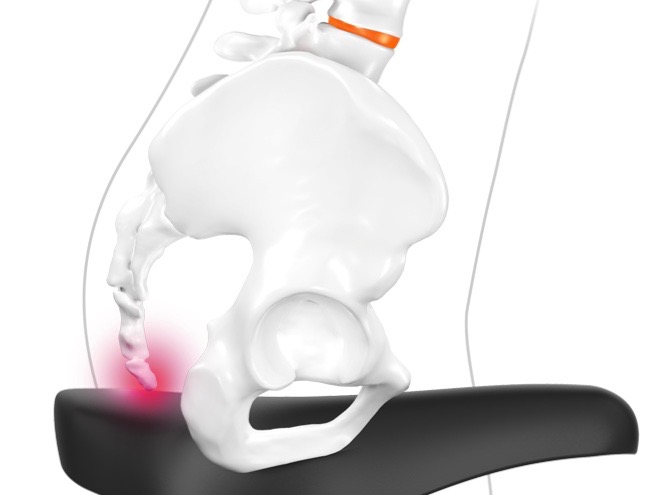
Soft saddles are meant for short distances.  If your saddle has a lot of cushioning or poor quality padding this may actually be causing the problem.  As you ride further and are seated for longer – it usually takes around 30 to 45mins – a soft saddle allows your body too sink too far.  This means structures like your tailbone that are not meant to make contact with the saddle will.

This sinking is more likely to lead to tailbone issues for upright riders with a straight back, weight will be transferred directly down and as the soft padding becomes compressed the tailbone comes into contact with the saddle and begins to take weight.

Another outcome of spending longer on the bike can also be a tired and collapsing body position.  If you are not maintaining a flat lower back but tucking under or rounding this changes the mechanics of where your tailbone will be situated.  Again, like the sinking into the soft padding, this collapsing of your body shape allows the tailbone to make contact with the saddle.

Finally the width and shape of your saddle has a role to play.  Your sit bones need a good flat platform for contact directly underneath them.  If your saddle is too narrow and has a rounded shape that allows your sit bones to “fall” off the edges, the structure of your seat will be much closer to your tail bone.

endurance padded pant & chamois cream

Your tailbone is not meant to take weight so if it is in contact with the saddle this will lead to discomfort.

How to Reduce Tailbone Problems

Saddle Set Up – how your saddle is set up effects your ability to sit on it.  Make some adjustments to see if you can help resolve your issue.  Firstly check that your saddle is level and not nose up.  Please read…  Saddle Position – Height, Tilt and Reach

Handlebar Height – If you ride in a very upright position please consider lowering your handlebars at the handlebar stem.  Start with a small lowering of around 1cm to tilt your body slightly forward, therefore giving your tailbone more room.

Saddle Shape – what is known as a channel will definitely help alleviate tailbone issues.  This is a central depression running from the back to the front of the saddle.  The very rear shape of the saddle can also play a role.  An inverted V shape gives space to your tailbone.  Also having the correct width so that your sit bones are the bones that are taking weight.

Saddle Padding – soft, well padded saddles suit short distances.  If you have increased your riding time and started to experience tailbone problems this may be because you are sinking too far into your saddle, usually around 30-45 minutes into the ride.  A saddle with a flatter surface and less padding or gel padding is a better choice for endurance riding.

Core Strength – the stronger your core is the better your body position will be over time on the bike. it is really important to check in with your body position and make adjustments to maintain a good ‘A’ shape.

Rear view of a saddle showing a rear channel in the middle which creates space for your tailbone.

Other Ways to Improve Comfort

To follow is a short list of suggestions that you can choose to explore or ignore.  For weight transfer issues that cause pressure, bruising or discomfort:

  • Be very mindful of your body position and shifting it when riding
  • Improve the strength of your core muscles and legs
  • Lose weight; get bags or packs off your back and acknowledge that if you are over weight this will be adding to your problem
  • Let a small amount of air out of your tyres on bumpy surfaces this allows the tyre to absorb some of the impact 
  • Get up out of your saddle (stand on your pedals) when going over bumps, dips or uneven surfaces
  • Choose shorter rides
  • Choose rides with varying terrain which will change your bodies experience during the ride

Correct technique is a large part of being comfortable when you ride

Comfort & Contact Points

Your comfort while riding is a huge part of enjoying your time on the bike.  It will also keep you protected & safe.  There are three key points where you make contact with your bike.  The seat, the handlebars and the pedals.  It is important to understand how to position your body between these points

For more information see the following stories:

Your bike riding success is different to others… use our stories and support, get the right solutions.

Want more from your riding? 

Be supported to Ride as a Family, Progress Your Riding and/or receive Seasonal Inspiration. So you can SMILE when you ride.

All new members are automatically entered into our Seasonal Prize Draw.
SMILE when you ride

Support & Inspire other riders and families 

Share your riding outings, adventures and experiences on our quick and easy question and answer forms. Join us in helping others ride bikes. 

All entries are automatically entered into our Seasonal Prize Draw.